
Agents Are Consolidating Business Processes Across The Enterprise
How will agents transform the org chart across the enterprise? As agents become more capable, bold decisions must be made when integrating humans with automation.

Prior to the cloud, IT roles were heavily focused on managing physical devices, on-premises infrastructure, manual maintenance, and dedicated hardware. Job titles included system administrators, network engineers, data center technicians, and various specialized support positions.
While these job titles still exist, you’re finding them less and less in non-technical businesses. And the one’s that do exist interact with the cloud more and more frequently.
Much like the cloud consolidated physical infrastructure for the enterprise, agents are consolidating business processes for the enterprise. The very nature of the enterprise will evolve much like it did during the cloud era.
Business Processes Are Next
With the rise of agents, there are plenty of bets that 2026 is the year of the agentic co-worker. Just briefly consider Claude Cowork, OpenAI Frontier, and Ariso. The topic of performance reviews, employee sentiment, and what this means for the workforce will be saved another newsletter.
Today’s focus is: what happens to the departments, the divisions, the organizational functions that have spent decades encoding business logic into human workflows? What happens when this business logic becomes intertwined with humans and agents?
This is not a distant, speculative question. It is already happening. The open question is not whether your organization will automate its processes, but how deliberately you will do it, and whether you will be left with a coherent governance structure on the other side.
What Gets Automated First Matters
Agentic automation starts in the low-friction, high-volume workflows: lead qualification, invoice processing, customer support triage, contract summarization, data entry reconciliation, customer experience. These are the processes that organizations have long wanted to automate but found too complex or too fragile for traditional RPA.
Agents can reason over unstructured data, handle exceptions, and pass control to a human when needed. This makes them suited for exactly the kinds of messy, semi-structured business processes that make up the majority of enterprise operational work.
You cannot automate what you have not defined. Clear SOPs and business processes must remain framework-agnostic, human-readable, versionable, and governable.
The trap most organizations fall into is treating each automation project as a one-off engineering effort. A workflow gets built in LangGraph. Another gets built for OpenAI Assistants. A third is deployed as a python script in a lambda. Each team reinvents guardrails — or ignores them altogether. Business logic gets buried in framework-specific code only the original developers can touch. Business stakeholders lose visibility into their own processes.
This is the same mistake enterprises made with cloud before infrastructure-as-code became standard practice. Terraform did not compete with CloudFormation at the code level, it owned the declaration and the state. The agentic equivalent is emerging now: a process contract layer that is framework-agnostic, human-readable, versionable, and governable.
How Every Department Must Adapt
The shift to agentic automation is not purely a technology story. It is an organizational redesign. Each department faces a distinct set of pressures, opportunities, and risks. The departments that adapt deliberately will look very different from those that are disrupted reactively.
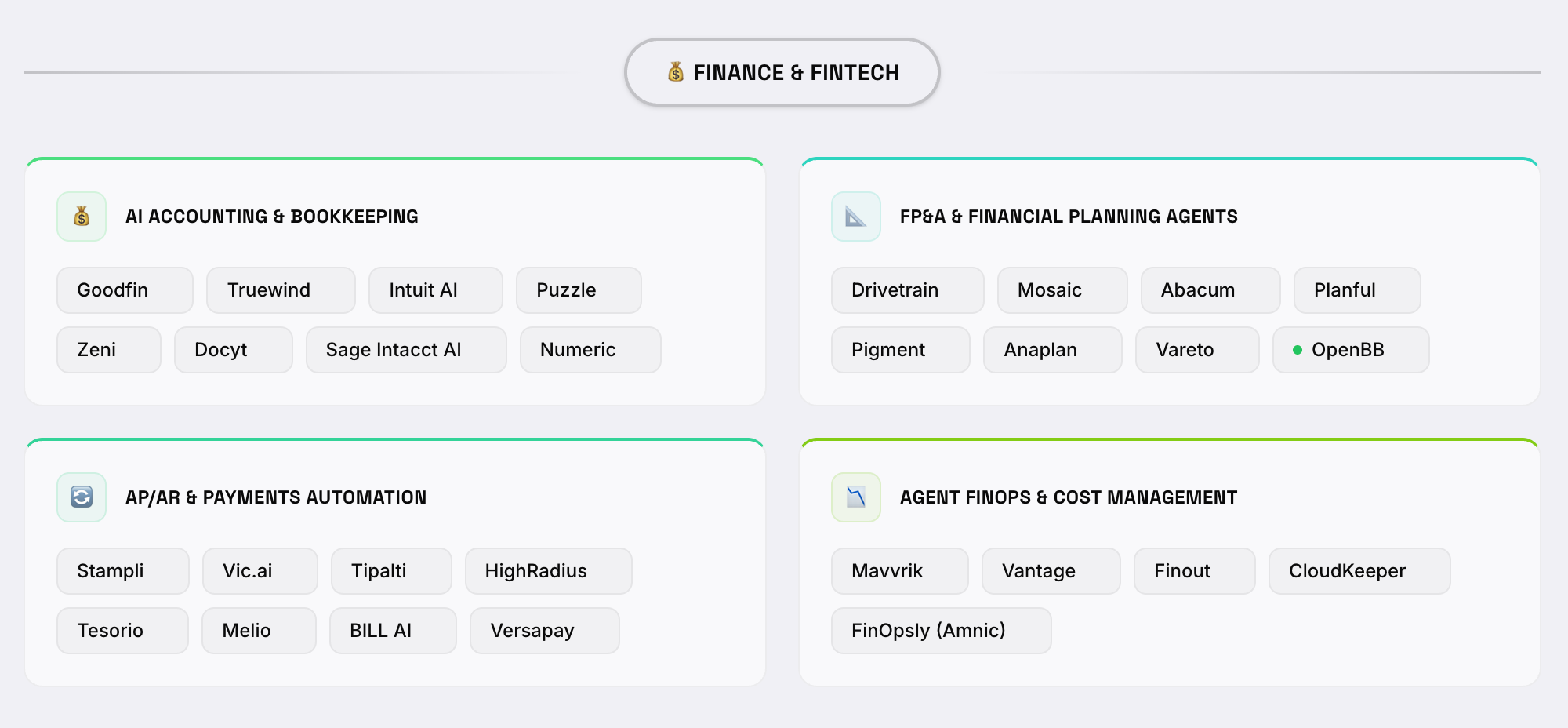
Finance & Accounting → From Reconcilers to Auditors
AP/AR, reconciliation, variance reporting, and expense classification are among the highest-ROI candidates for agentic automation.
The finance function evolves from processing transactions to auditing agent behavior and managing cost attribution across automated workflows. The CFO’s new question should not be “how do we process these invoices faster?”, it should be “how do we govern the systems that process them automatically, and how do we attribute their costs accurately?”
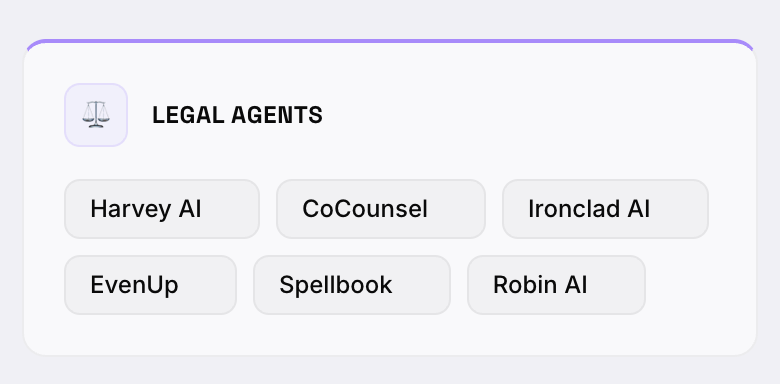
Legal & Compliance → From Reviewers to Policy Architects
Contract review, regulatory filings, compliance monitoring, and dispute documentation are already being addressed at scale.
Legal must be involved when defining what agents can access, what requires human approval, what constitutes a violation before one occurs. Policy becomes operational infrastructure, not a PDF in a shared drive.
The enterprise lawyers and compliance architects who will be most valuable in the agentic enterprise will do three things well:
Translate regulatory intent into operational controls
Maintain clarity on the rapidly evolving legal landscape
Hold the engineering team accountable if the implemented controls drift
Most regulatory frameworks were written for human workflows. Regulators are behind. Courts are behind. Compliance in 2026 means making defensible calls in a gray area, not following a clear rulebook. Every agent that touches a regulated record is a compliance event.
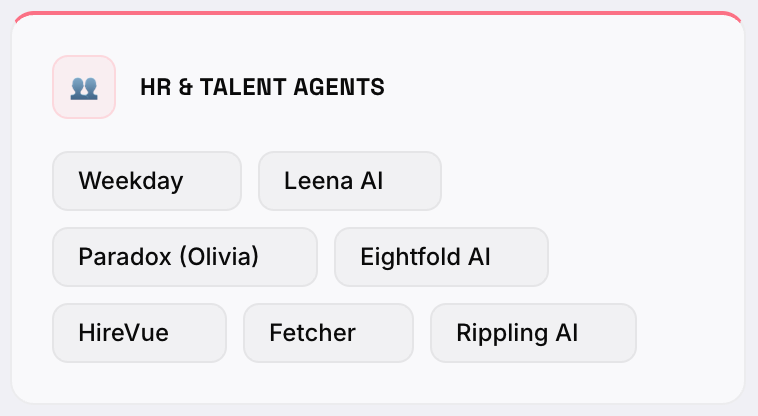
Human Resources → From Administrators to Experience Designers
Hiring, onboarding, benefits administration, payroll query resolution, and compliance training are ripe for automation.
Once agents are embedded in workflows, HR has to consider questions it’s never had to answer before. How do you measure individual performance when an agent contributed to the outcome? How do you structure compensation? How do you maintain culture and employee trust in an organization where headcount is shrinking but output is growing? What laws (union, state, federal, international) might play a factor into hiring and headcount?
On one hand, HRBP of 2027 will spend less time processing paperwork and more time designing the conditions under which people do their best work alongside automated systems. Whether this leads to headcount reduction is yet to be proven, but signs point this direction. However, most headcount reduction seems prioritize shareholder sentiment and cutting a bloated workforce at the time of this writing.
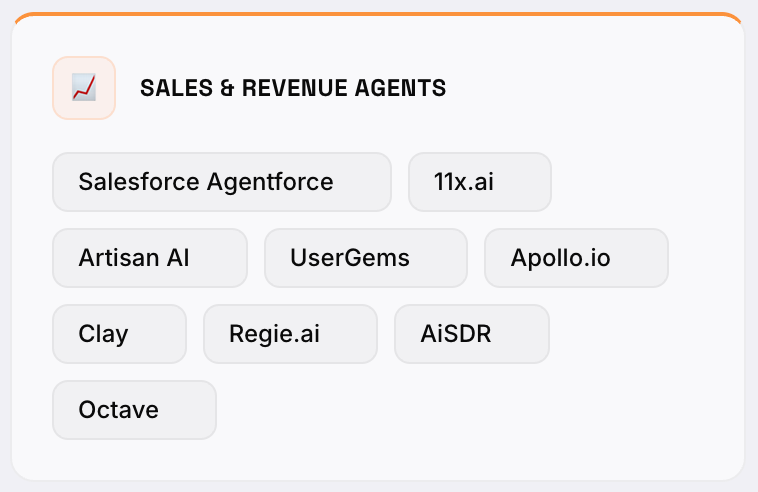
Sales & Revenue → From Pipeline Managers to Orchestrators
Lead scoring, outreach personalization, proposal generation, and CRM hygiene become agent tasks.
Sales leadership moves from managing reps through activities to orchestrating multi-agent pipelines that surface the highest-leverage human moments. The best salespeople will be the ones who know how to work with agents to amplify their reach while maximizing the moments that require genuine human connection.
Marketing → From Creators to Campaign Orchestrators
Drafting, personalizing, A/B testing, and distributing content are among the highest-volume, lowest-differentiation tasks in a marketing department.
Brand messaging is not one process to fully automate though. Knowing which message lands, which framing is off, and which campaign would embarrass the company in six months will all be agent-assisted processes. Marketing shifts from producing content to curating and directing the systems that produce it.
The marketers who thrive will be:
The ones who can brief an agent as precisely as they once briefed a copywriter
Those who understand which creative decisions still require a human with taste in the room
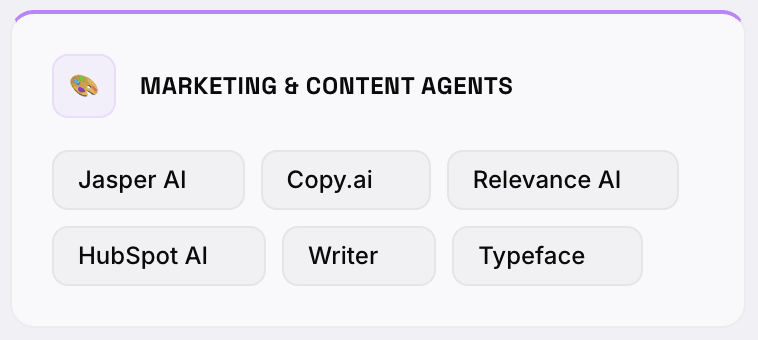
Operations → From Coordinators to Control Plane Operators
Procurement, customer services, vendor management, logistics coordination, supply chain, and quality control workflows are increasingly agent-executable.
Ops becomes the team that maintains process definitions, monitors agent behavior, and manages escalation when automation fails or behaves unexpectedly. This is a more technical role than traditional operations, and a more strategically important one.
Traditional silos will merge heavily across operations as technical team members embed themselves even closer to the people running the business processes. This area of any business stands a lot to gain as far as individual business advantage is concerned.
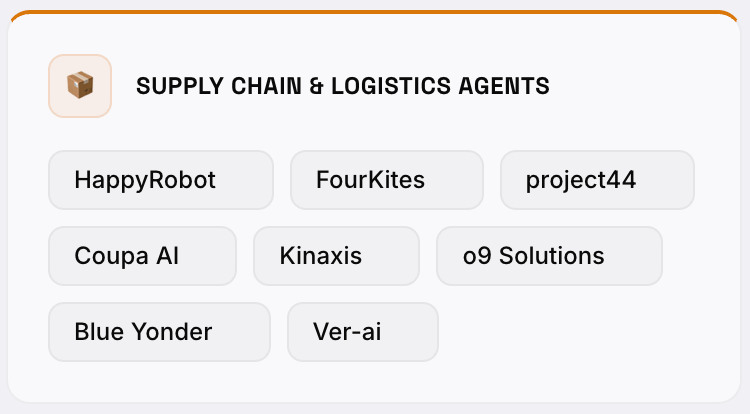
Data → From Stewards to Semantic Architects
Agents generate data as a byproduct of every action they take: summaries, classifications, extracted entities, decision logs.
This generated data quickly expands on the source records that it originated from. The data team has to decide what gets stored, where, and for how long, all while managing a new data challenge (read: risk) that traditional governance frameworks weren’t built for: semantic drift.
The business’ data is quickly becoming the semantic layer that enables all agentic operations to have relevance and coherence. Data attribution, traceability, and semantic architecture are a necessity when implementing quality agentic solutions. As the old saying goes, “garbage in, garbage out”. And while you will ultimately want to spend time fine-tuning base models to improve context, the starting place is to semantically structuring your data with tagging, ontologies, relationships, and more.
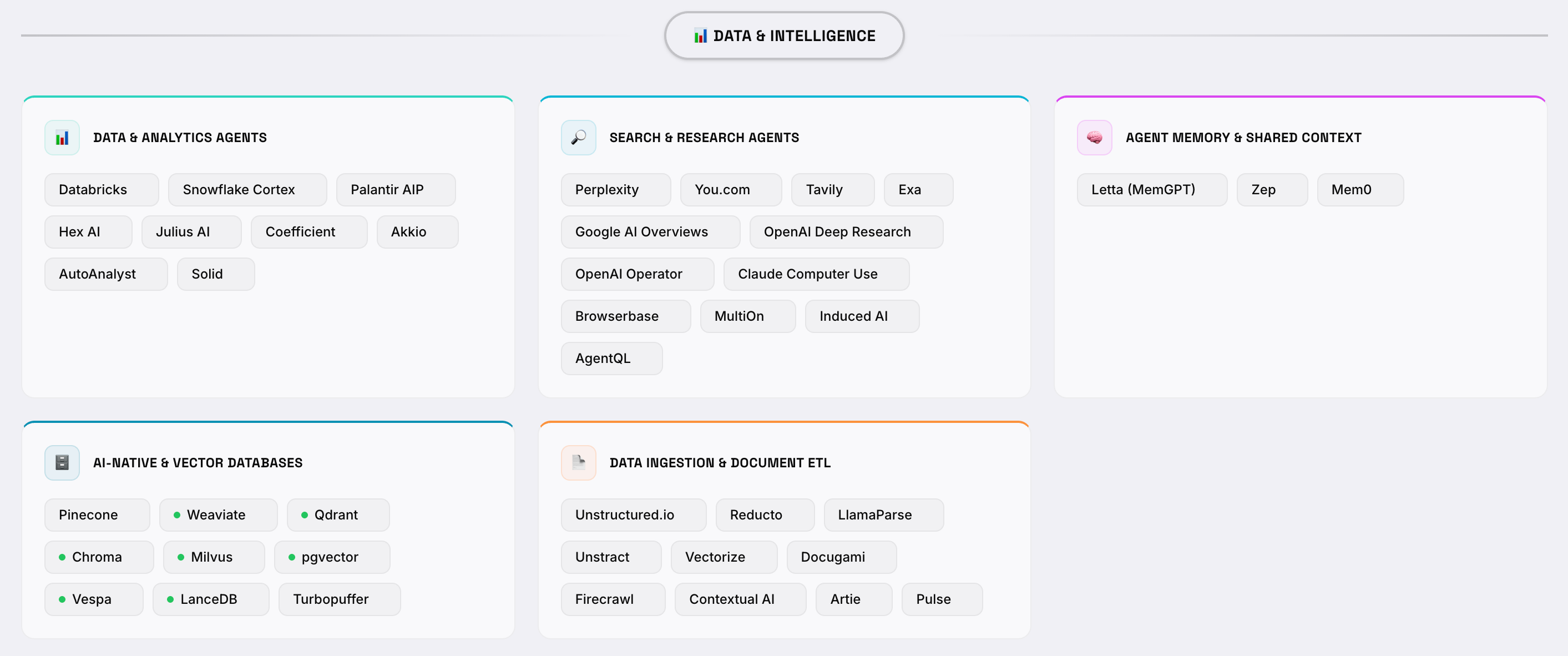
Cybersecurity → From Defenders to Control Plane Auditors
Code quality checks, application security testing, automated pen-testing, governance frameworks and automation, and modern identity solutions for agents are all under development.
But every agent that connects to a system, processes a credential, or executes an action in production is a new attack surface. This attack surface doesn’t get tired, doesn’t notice when something seems off, and doesn’t stop to ask questions when an instruction looks suspicious. The attack surface has changed from human principals with behavioral baselines to non-human identities that accumulate permissions, rarely get reviewed, and often have no off-boarding process.
Security’s job is shifting from approving & denying deployments, to defining what “normal” looks like for every automated process. This introduces a new class of security on top of the existing security stack, one that doesn’t feel solved in the slightest. CISO’s not only should be asking themselves “what are our users doing?”, but also “what are our agents doing, and how do we know?”.
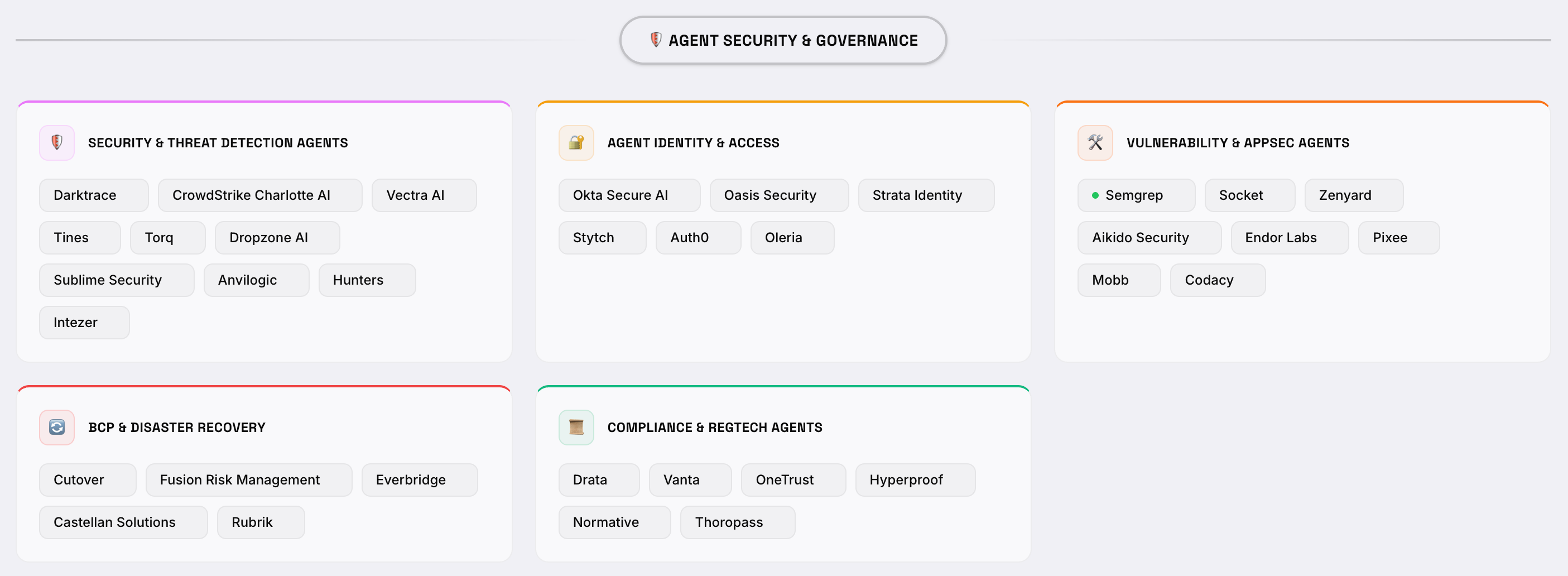
IT & Engineering → From Builders to Technical Governance
Engineering covers a broad set of specializations that will fracture under agentic pressure.
Platform and DevOps teams become the governance layer: owning process contract standards, validating that implementations match specifications, maintaining infrastructure, and operating the observability infrastructure every other department depends on. But a meaningful subset of engineers won’t govern from a distance. Instead they’ll move closer to the business as forward deployed engineers, embedded in departments long enough to understand the actual work and trusted enough to automate it correctly.
The function that may be most disrupted isn’t engineering at all, it’s project management. The traditional PM role exists to coordinate handoffs between business stakeholders and builders. When a forward deployed engineer is already embedded in the department, when process definitions can be written and deployed in days rather than sprints, and when the feedback loop between “here’s the problem” and “here’s the automation” compresses to weeks, this layer of coordination overhead becomes friction. The organizations that move fastest will be the ones that shorten the distance between the person who understands the process and the person who can automate it. Eventually, that may even be the same person.
Closing Thoughts
So much more could be said, and there is far more nuance than this newsletter allows. One thing is for certain though — there is significant upside for the organizations who capture their business processes and automate away the low hanging, high impact processes. The amount of capital that will be unlocked during this era will eclipse the previous SaaS era in ways that we won’t understand until it happens.
What do you think is going to happen?